From the Scholastic, My Name Is America, series, this work of fiction is disguised as nonfiction. The actual copyright is in the back, not the front, of the book. The subtitle, “United States Marine Corps, Khe Sanh, Vietnam, 1968,” seemed so matter of fact, I was taken in and went right to the journal entries. I was steadily disappointed by how heavily the ghost writer had inserted standard boiler plate, World War II propaganda, such as the clean, distinctive, ethnic and regional nature of the men in Patrick’s unit. I about had enough when the most weighty episodes of the entire book, which depicted every man in in Patrick’s unit, including himself, being maimed and or/killed, came down to three episodes concerning the only two black marines. The death of Mooch and Behop, being the most heart wrenching deaths, and the fact that the murder of Martin Luther King was the most psychologically traumatic event of an extremely brutal six months of combat in a distant jungle.
Afterwards, I find the actual copyright material in the back of the book, declaring it bogus fiction by a broad.
There was something too passive, too feminine, about the story of the high school football star from Boston fighting in Nam. As I considered approaching this subjects I had three things in mind:
1.) Arrian wrote of how most the things written about Alexander were fancies. Hammond seconds this with his review of the sources, showing those sources other than Arrian that survived time, come from effeminate arm chair thinkers, who did not serve in combat as Arrian had.
2.) That a vast body of popular tradition claimed by Arrian to reflect popular traditions has been mostly lost, and that the discussion of Alexander’s campaigns tend to focus on major State level military formations, both conscript and volunteer, and downplay the units that did most of the fighting, the volunteer, tribal Agrianes [mountain men] and the Archers [mostly Scythian and Cretan: nomads bandits and pirates.]
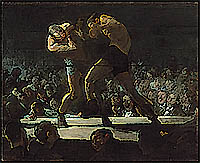
3.) “Men as they were,” a phrase by Homer, used often in the Iliad, contrasting the weaklings of his day with the heroes of yesterday. Bob asked me today, as we walked pasta deer carcass recently taken by a cougar, about the boxers of his father’s time, a man who boxed in the 1920s, who saw Dempsey box. “James, the boxers of that era, as small as they were compared to today, how would they fare against today’s boxers?” To that question, I answered that the giants of today would be taken apart: lacking childhood encrypted instincts, base childhood skills, experience—fighting 2 bouts to every old timer’s 10 bouts—as well as toughness, against men coming from a time when every boy boxed.
I went on, “Take any activity, shooting, don’t start until 12: you have a retard. Don’t start hunting and trapping until 18, like modern Special Forces: you have a retard.”
That then took me down the road of the soul. Ancient warriors reported ZERO PTSD! None, nada, not at all. Modern veterans need drugs, support dogs, support groups. This places the modern veteran of industrial and post-industrial wars, shell-shocked, combat-fatigued, PTSD’s, after having been declared victorious by the propaganda ministers, in the position of the ancient slave soldiers of the Persian armies that faced the Agrianes, and were defeated, of being broken. There are the natural disaster-like effects of artillery, aviation, machine guns, etc., Yet, the key is obvious once one has spoken with dozens of American soldiers from a dozen wars. How is it our victors act like ancient losers?
The modern war fighter is taken from a non-war culture—indeed, an anti-warrior domestication system—and made into a temporary killer. As such he does not operate within a warrior culture, despite the lies calling him a warrior. He operates under a managerial system, directed by non-combatants who come from an alien social strata of college-educated mind-slaves, who naturally resent the war fighter’s on the scene action, which grants him actual war culture honors. This war honor is denied. The enemy is denigrated as subhuman and unworthy. Graphic victory is not permitted, but mere cessation of managerial hostility. The war fighter, who has committed acts and survived frights that in any age would have granted him warrior honors and admitted him to a lifelong fraternity, is now, not only denied warrior status, but returned to Money World. Marooned there, either as a denied soldier [contractor whose death will not even be noted by his nation] as he fulfills his contract, he is as contractor or civilian, returned to an anti-heroic, anti-warrior society. In this society, he is not even allowed to defend himself or his wife or child, without being shackled and judged by system functionaries.
This unnatural system is so dehumanizing, and so unmanning, so hero-hating, that a vast stock of drugs, therapeutics and Jason Statham movies are required to maintain the fiction that a temporary war fighter is not always hated by the machine he serves. These state machines are very similar to the Persian system that Alexander led the Agrianes against. Indeed, both the Archemedian Empire and the American Empire were and are entirely controlled by international banking houses with a fully obscured international profile.
Alexander went after Civilization itself, restoring tribes, towns and folk faiths wherever he conquered. He faced mutinies by most of his army and conspiracies from most of his high ranking officers, which I am naturally inclined to place at the hands of banking agents. Only two units are known to have never wavered, to have never mutinied, to have always been first, to have gone where no other of Alexander’s warriors went—into forests, swamps, mountains—those were the Agrianes and the archers: barbarians and semi-barbarians all. By definition, slingers, darters, and archers were lifetime warriors, men who learned their skills from boyhood, in traditional societies, among remote hinterlands.
The histories of Alexander that affront Arrian, and place him as a source equal to Plutarch, Diodorus and Quintus, project sissy, womanly concerns backward upon an ultra-masculine war culture. So, also did the brilliantly written fiction of Khe Sanh, by a broad named Ellen, who in antiquity would be washing her subject’s feet rather than inventing his internal morality, appeal down trough time, as an ideal projection rather than as a reflection.
It is the mission of The Areid, to reflect ancient war culture, not project modern whore culture upon that hallowed past. There is yet a value to such corrupt and womanly screeds as pass for war stories under USG, they depict—whether accurately as in To Hell and Back, or not—the plight of war fighters whose heart is only partially in the fight, who also enjoy overwhelming, even godlike material superiority, over their foes. In short, modern USG war memoirs depict the viewpoint of the Persian combatant: if, he had no radio to call in for air strikes or evacuations, being managed by rear echelon commanders via messenger, facing a smaller force of more experienced, more skilled, better armed attackers, who were following their leader.
As I write The Areid, any war memoirs I read, shall be assigned to the purpose of connecting either with the Agrianes or their foes.