


“When you have some free time send me an email with stuff for me to work on. I know I was tired when I fought James but guys are too easily able to clinch with me.”
-Sean, 11:29 AM Sunday, June 7
I am currently writing a novel in which the hero is based on another man I coach. Likewise, Sean is a man I have coached also for about ten years, who has served as a hero in a novel. In July I will be writing a bare-knuckle boxing/dirty boxing manual for Alex and those other prime men I have the honor to work with. This piece here involves footwork options that are no longer generally employed in boxing. I am going to recommend a considerably unorthodoxed form, with the caveat that this is for advanced fighters, who have a solid boxing base.
Twenty years ago an obnoxious Moroccan named Hassim, I think, essentially used stick fighting foot work to box and briefly rule a division of orthodox fighters. Not possessing a sound boxing root, he eventually became a train wreck. But Sean has an excellent command of standard foot work. He is a southpaw kicker that fights from both leads. That is our basis, using weapon fighting mobility in an unarmed context to avoid the clinch and serve up beat downs in a clinch tolerant contest.
Against a man who can box and clinch, in a scrap, or in a contest that does not employee a third party to force the clinch, there is one rule for denying the clinch: it is the first priority, before power. Clinch denial priority tracks like so:
1.) Deny the clinch, if you cannot do this, you belong to the clinch and might as well become a clinch fighter
2.) Post the jab
3.) Hit the body with straight shots
4.) Defend the head with movement, to the point of eating a punch rather than clinching
5.) Replace hands
6.) Pass punch
…
7.) Safety pivot
8.) Replace feet
9.) Shift
We will go through these in order. Look to Foreman versus Frazier and Norton, and Foreman’s commentary on the full length Jones vs Ruiz fight on HBO. Note in Foreman versus Ron Lyle, how George walks with his uppercut. When you have dominated the clinch, you can punch from a walking posture, as the foe is now serving as your third leg.
To be a boxer, in the old time, bare knuckle sense, is to use fencing methods to deal with a grappler who can punch well enough to hurt you and is too tough for you to KO without wrecking your hands. In dirty boxing terms, the “puncher” or pressure fighter owns the clinch.
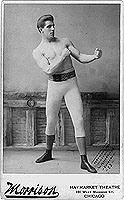
1.) Denying the clinch is #1. Every punch that lands lands in clinch range. So, committing to landing punches as a first principal guarantees you will be in the clinch. Note that early gloved boxers trained with pro shoot wrestlers. Bare knuckle boxing bouts of old were developed in about 1700, and perfected by 1748, as a means of permitting rich fencers in the city to have sub lethal contests with poor wrestlers driven into town by the enclosure acts from the country. The first champion, James Figg, 1720s, was known as “the Atlas of the Sword,” [1] and won his bout against a certain “pipe-fitter,” by a standing arm lock.
In the 1890s gloves were instituted to permit rich men to once again carry the name boxer, where they had been relegated to “sparrer,” by tradition. Clinching was eliminated for the same reason why a raised ring was employed for the modern game, for the spectator’s enjoyment, not to test the combatant. Clinching in US Olympic Style boxing was outlawed, to include defending against the clinch, in the 1990s, at the same time that a point was no longer granted for knocking a boxer down.
2.) Post the jab. The jabbing fist, and heel of hand, must be committed to using as a stiff arm first, and a scoring blow second. The must successful use of the measuring lead was by Ali, to include wrist to shoulder, palm to head, and fist pushing. Traditionally, the taller man must establish this before using the jab for scoring, setting up heavier blows, or doing damage. The jab is primarily to fix the foe like a post in the ground that one moves around, making the other boxer a reference point more than a threat. Once this is done, prefer the jab for doing damage and cleaning up, rather than setting up.
3.) Use no rotational punches against the body, only straight shots. In catch weight matches this is very important. Targeting the chest is best for denying the clinch as it puts his shoulders behind or in line with the hips. Hitting lower than the chest, begs the shoulders to come forward into a wrestling pose. Doing so with bent arm, begs to be clinched.
4.) Basic counter clinch defense begins with both sparring partners set to, the clincher throwing straight punches to the face, the defender moving from the waist as he counters with straight punches to the body. Advance this drill to the puncher mixing in hooks and upper cuts with clinch attempts countered by a weave, to a shoulder check, to a safety pivot.
5.) If you keep your checking hand on him, he can clinch with that, especially if he’s a jitz or MMA fighter. Replace the checking hand. With the other hand as you move.
6.) Pass punching begins with the jab thrown against an entering fighter while stepping back, then fading at 45, then side stepping, then shift stepping. This is the old U-hustle drill. Do this with Thai pads against a training partner.
Pass punching advances to the sidestepping bag drill, jabbing as you side step with the rear foot, and throwing the rear hand as you side step with the lead foot.
Advance this by throwing a high safety blind jab to intercept a cross while stepping past your jab with the lead foot, then sinking a sneaky straight rear hand into his chest after the step but on the drag, bringing the lead jab back to a high shield or dropping it to a stop or a shoulder check.
The pass punch we want the most from the lead, is the hook, shovel or Philly. Do not pivot, but side step as the hook is thrown, a half power hook that he can run into. I think Crusher Kovalev one his 6th fight with this punch. Step to the side as you punch, dragging the lead foot through as it lands or misses. This can also be done with rear hand hooks.
Advance this to a short back lunge, then a fade lunge, then a side lunge, then a forward 45 degree shift lunge.
Recover by dropping the hooking wrist down on his shoulder. The punch should exit his jaw above his shoulder, there to drop and stiff arm.
The safety pivot, replacing feet and shifting are no longer understood as boxing methods, but are retained in the fencing arts. These will compromise the advanced clinch denial set.
Notes
1.) See Hogarth’s likeness and read Captain John Godfrey’s Defence handbook




Helpful